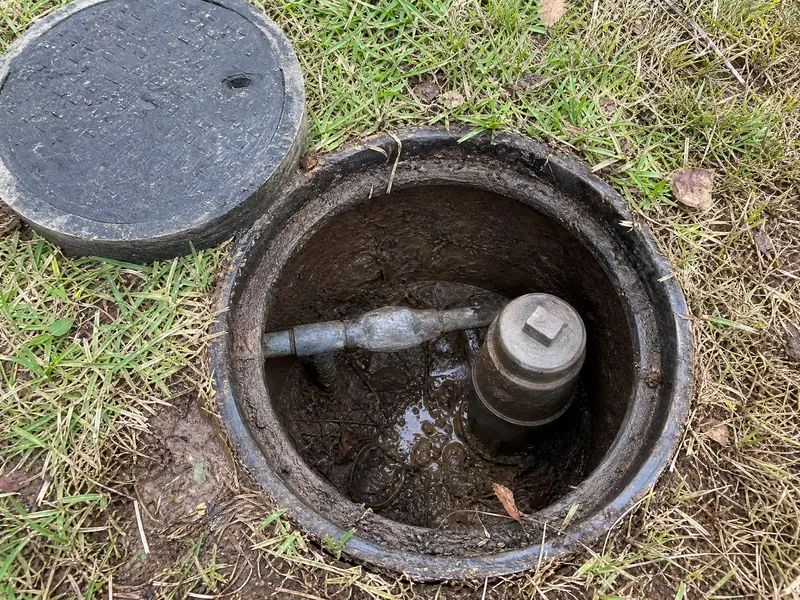
A service line is the small pipe that carries water from the main under the street to a house. Clarksville Gas & Water (CGW) finished the EPA-required inventory of these lines in 2024 and put the results on a public map, the Water Service Material Public Portal. The counts on this page are our own tally of that map layer, made on 6 Nov 2026; CGW has not published a summary count of its own.
What does CGW's map list for the homeowner's side?
It lists no lead and no unknown lines, but 3,252 galvanized lines marked for replacement. Most of the rest are tagged "Post 1988 Not Lead", meaning the house was built after Tennessee's lead ban and was outside the survey. Plastic and copper make up most of the surveyed older homes.
The map layer was last edited on 5 Nov 2026, so the numbers can move as CGW updates records. A few extra fields in the layer are not explained on the portal, and we left them out.
Which part of the line is the homeowner's?
The homeowner is responsible for the line from the meter box to the foundation, plus all plumbing inside. CGW's lead and copper rule page says the utility side runs from the main to the meter box, usually near the property line, and that "the customer/homeowner is responsible to replace the private service line from the meter to the foundation." That split explains the chart below: CGW has cleared its side, while flagged galvanized lines remain on the house side.
Why is galvanized pipe flagged at all?
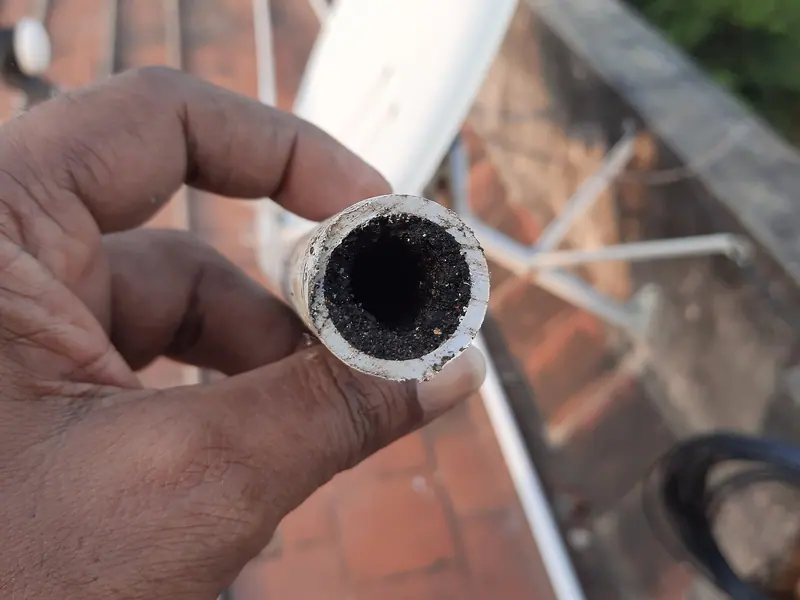
CGW counts galvanized steel alongside lead because the zinc coating can contain lead and the pipe can pick up lead from older lead pipe upstream. In Clarksville, galvanized steel was used on the utility side from about the end of World War II to the early 1960s, then Type K copper took over; builders kept using galvanized on the house side for longer. CGW's status note from October 2024 says it knew of no active lead lines on either side, but "several" customer-side galvanized lines.
How do you look up one Clarksville address?
Open the Water Service Material Public Portal and type the address into the search bar at the top right of the map. The record shows the material CGW crews identified at the meter for both sides. Only houses built before 1989 were surveyed, so a newer house will show "Post 1988 Not Lead". The city also offers a self-check worksheet, the LCRR Service Line Identification Tool, for comparing the pipe where it enters your house.
The video above is from a Memphis utility, so its address lookup does not apply here; Clarksville homes use the CGW portal linked in this section. Federal law banned lead solder in 1986, and Tennessee adopted that ban in 1988.
What did CGW's lead tests at homes find?
They found no lead above the reporting level at the 90th percentile. In June 2024 CGW sampled taps at 50 homes for the EPA lead and copper rule, and the 2025 annual report gives these results:
| Metal | 90th percentile | Range | Homes above action level | Action level |
|---|---|---|---|---|
| Lead | not detected (under 2 ppb) | below detection to 2.5 ppb | 0 of 50 | 15 ppb |
| Copper | 0.231 ppm | 0.039 to 0.312 ppm | 0 of 50 | 1.3 ppm |
CGW has treated the water with a food-grade phosphate since 1991; it coats pipe walls to slow metals leaching. More readings from the same report are on our water quality report page.
What if a house's line is marked galvanized?
CGW recommends having a plumber replace it, and to look at the inside plumbing and fixtures too. Replacing a service line means digging from the meter to the foundation and making new connections, so it is a job for a licensed plumber with a permit. Inside the city limits, homeowners may not pull plumbing permits; our permits and licenses page explains who can. A household weighing the cost can see the water bill shelf at your bill for what CGW charges.
Can a newer house still have lead in its plumbing?
Less likely, but brass fixtures and older solder can add some. CGW notes that brass fittings, faucets and solder can still cause lead in a home's water. Federal rules have since cut allowed lead to a 0.25% weighted average for pipes and fittings, per the city page. The EPA's lead basics page covers testing and tap habits.
Behind these numbers
The material counts are our tally of CGW's live map layer on 6 Nov 2026, not a CGW report, and they may not match the inventory CGW filed with the state in October 2024. Tap results come from the city's 2025 report, which covers June 2024 samples. The map shows what crews found at the meter; it does not inspect pipes inside walls, and the next lead sampling round is not yet published.
Questions people ask
Does "galvanized requiring replacement" mean the water has lead in it?
No reading is attached to it. It is the category CGW uses for galvanized lines it wants replaced, because galvanized pipe can hold or pick up lead. Testing the tap is the way to know what a house's water contains.
Will CGW replace the line on the homeowner's side?
CGW's page puts the meter-to-foundation line on the homeowner and recommends a plumber for the work. Questions about a specific record are best put to CGW itself.
Why does a house built in 1995 show "Post 1988 Not Lead"?
CGW surveyed only buildings from before 1989, when Tennessee's lead ban took effect. Newer homes were classed by their build date rather than by a crew visit.
Who tests a Clarksville tap for lead?
The city's annual report tells customers to contact the Clarksville Water Plant to arrange a test. A state-certified lab is another route.
Does the map cover CGW customers outside the city limits?
Yes. CGW says its material data is available for all CGW customers, which includes the parts of Montgomery County it serves. Homes on a private well or another water system are not on it.
Sources
- CGW — Water Service Material Public Portal, Service Material Survey layer · utility- and customer-side material labels, our count of 83,135 records · checked 6 Nov 2026
- City of Clarksville — EPA's Lead and Copper Rule for Clarksville Gas & Water · who is responsible for each side, galvanized history, October 2024 status, corrosion control, 1986 and 1988 bans · checked 6 Nov 2026
- City of Clarksville — Annual Drinking Water Quality Report, 2025 data · June 2024 lead and copper results, inventory completed in 2024 · checked 6 Nov 2026
- City of Clarksville — LCRR Service Line Identification Tool · homeowner self-check worksheet · checked 6 Nov 2026
- US EPA — Basic Information about Lead in Drinking Water · cold water, flushing, boiling does not remove lead · checked 6 Nov 2026
- Memphis Light, Gas and Water — Replacement of Lead Service Lines (video) · how replacement works · checked 6 Nov 2026