
What does the meter test involve?
Turn off every tap, appliance and sprinkler, note the meter reading, and read it again two hours later. EPA's Fix a Leak Week page says that if the number moves at all, there is probably a leak. Many meters also have a small spinning dial or triangle that turns with very low flow, which shows a leak in minutes rather than hours.
In a CGW meter box, put the lid back as soon as you have read the dial so no one trips on the open hole. If the meter still moves after you close the house's main shutoff, the leak is likely in the buried line, and that is a job for a licensed plumber.
How much water do common leaks waste?
EPA puts the average household's leaks at more than 9,300 gallons a year. A faucet dripping once a second wastes more than 3,000 gallons a year, and a toilet with a leak can lose roughly 200 gallons every day, by the count on EPA's WaterSense Kids page.
EPA also notes that 9 percent of homes have leaks of 50 gallons or more a day. A family of four using more than 12,000 gallons in a winter month may have a serious leak, by EPA's rule of thumb.
What does a leak cost on a CGW bill?
Inside the city, each 1,000 gallons costs $12.59 once water ($4.45) and sewer ($8.14) are both counted, at the July 1, 2024 rates. Sewer is charged on metered water, so a leak that never reaches a drain is still billed as sewer.
Outside the city the same gallons cost far more, because both rates are higher.
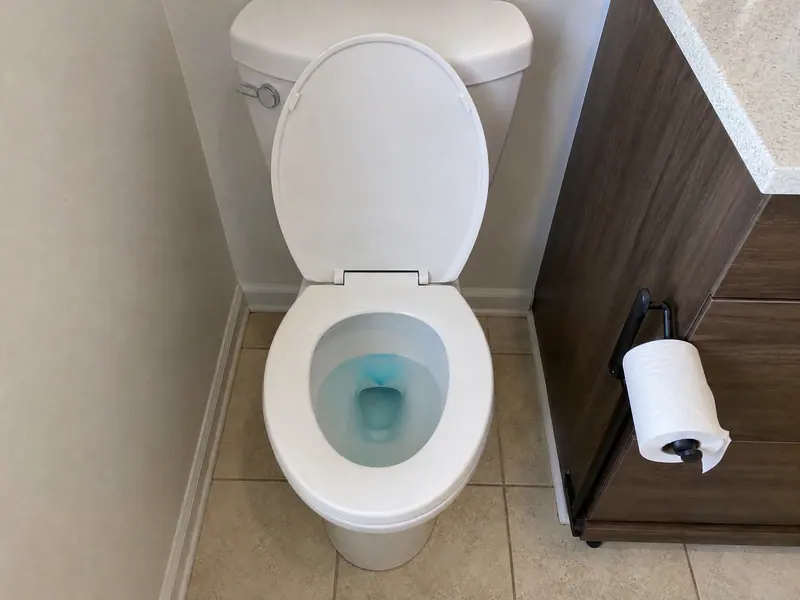
How do you find a toilet leak?
Put a few drops of food coloring in the tank, wait 10 minutes without flushing, and look in the bowl. EPA says color showing up in the bowl means the tank is leaking into it. The flapper and fill valve inside the tank are the first parts to look at; if water is reaching the floor, or you are unsure, call a licensed plumber.
Who pays for a leak between the meter and the house?
The owner does. In its water pressure FAQ, CGW draws the line at the meter yoke: from there to the building, upkeep falls to whoever holds the deed. A wet patch in the yard between the meter and the house, plus a meter that moves with the main closed, points to that line. We found no CGW leak-adjustment policy in its published pages, so ask CGW about the bill once the repair is done.
What if you also need to shut the water off?
Know where your main shutoff is before you need it. If a pipe bursts, close the main first, then deal with the water. The house left empty page covers the shutoff for trips, and crawlspace pipes covers where lines tend to fail in winter. The bill lines are explained on the CGW bill page, and summer jumps that are not leaks are on the summer bill page.
Questions people ask
How long does a meter leak test take?
EPA suggests two hours with no water used. The low-flow dial on many meters can show a leak in a few minutes if you watch it closely.
Can a running toilet really raise my CGW bill that much?
At about 200 gallons a day, a month of leaking is roughly 6,000 gallons, about $75 at inside-city rates. That is close to a whole 5,000-gallon bill on its own.
Does CGW charge sewer on water that leaks into the yard?
The rate schedule bills sewer per 1,000 gallons of metered water, with no exception printed for leaks. Ask CGW whether any adjustment is possible after a repair.
Is the line from the meter to my house mine to fix?
Yes. CGW's split puts the run from the meter yoke to the house with the homeowner, and digging up and repairing it is usually a licensed plumber's job.
What if the meter moves even with the main shut off?
That usually means the leak is between the meter and the shutoff, often in the buried service line. Put the meter lid back and call a licensed plumber.
Behind these numbers
Gallon figures are EPA's national numbers from pages updated in March 2026; they describe an average home, not a Clarksville one. The dollar bars multiply those gallons by CGW's July 1, 2024 rates, checked on 6 Nov 2026, and are our sums. They assume the house already uses more than the 2,000-gallon sewer minimum; below it, the sewer line would not change. A second EPA page gives a slightly different yearly leak figure; we use the Fix a Leak Week number throughout.
Sources
- EPA WaterSense — Fix a Leak Week · 9,300 gallons, faucet drip, meter and dye tests, 12,000-gallon rule · checked 6 Nov 2026
- EPA WaterSense — WaterSense Kids · about 200 gallons a day from a toilet leak · checked 6 Nov 2026
- Clarksville Gas & Water — Water Rate Schedule A and Sewer Rate Schedule · inside and outside per-gallon rates, July 1, 2024 · checked 6 Nov 2026
- Clarksville Gas & Water — Water Pressure FAQ · owner's side of the meter yoke · checked 6 Nov 2026
- Seattle Public Utilities — Using Your Meter to Find a Leak (video) · meter dial and main-shutoff comparison · checked 6 Nov 2026