
Hardness is the calcium and magnesium dissolved in water, reported as if it were all calcium carbonate. Clarksville Gas & Water (CGW) publishes it on its Water Quality Report page as an average of 2025 operating data, in both parts per million and grains per gallon. The numbers below come from that table and the US Geological Survey's hardness classes.
Where does 97 mg/L sit on the USGS scale?
It sits just above the middle of the moderately hard band (61–120). The USGS Water Science School puts 0 to 60 mg/L as soft, 61 to 120 as moderately hard and 121 to 180 as hard, all measured as calcium carbonate. Clarksville's 2025 average of 97 mg/L is 23 points under the line into hard.
Above 180 mg/L, off the right end of this ruler, USGS uses its fourth class, very hard. No CGW reading in 2025 came close to it.
How much does Clarksville's hardness move during the year?
It ranged from 78 to 132 mg/L across 2025, or 4.56 to 7.71 grains per gallon. CGW notes that values "may vary from day to day"; the plant draws surface water from the Cumberland River rather than a fixed underground source. Most days sit near the average; the published table gives only the low, the average and the high.
Grains or milligrams: which number does a softener use?
Softener and dishwasher settings usually ask for grains per gallon. CGW's own table pairs 97 mg/L with 5.67 grains, a ratio of about 17.1 mg/L to one grain, so divide a mg/L reading by 17.1 to get grains. If a setting needs a whole number, 6 is the rounded average; a household that wants a margin for the high days can use 8, the rounded top of the range.
Is moderately hard water a health problem?
No federal health limit applies to hardness. The EPA's secondary standards cover taste, staining and scale, and hardness has no number of its own there. USGS notes that hard water can add a little calcium and magnesium to the diet. The effects people notice are practical: spots on glasses, a crust on shower heads, and scale inside a water heater.
Alkalinity, at 74 mg/L, helps keep pH steady; the 2025 pH averaged 7.9. Sodium figures come from the 2025 annual drinking water report, which covers the regulated readings in more depth on our water quality report page.
Do you need a water softener in Clarksville?
Most homes on CGW water do not need one; at a moderately hard average it is a choice about comfort and cleaning, not safety. A softener mainly cuts scale and soap use. Households that notice heavy crust on fixtures, or that want to slow buildup in a tank heater, sometimes add one, while others manage with a yearly water heater flush and regular cleaning of shower heads and aerators.
Penn State Extension's video walks through how hardness is measured and how an ion-exchange softener and its resin are looked after. Calcium and magnesium carry a positive charge, which is what lets the resin trade them for sodium or potassium.
How can you test hardness at your own tap?
A strip or drop test kit gives a reading in a few minutes, and it is the quickest way to check a softener's output or a well. City water is already measured for you, so a home test mostly confirms CGW's range. A private well is a different source with its own chemistry; our page on well water in Montgomery County covers which tests the state and CDC suggest.
Behind these numbers
These figures are CGW's averages of 2025 plant operating data, checked on 6 Nov 2026, set against the USGS hardness classes. They describe water leaving the system, not what reaches every tap: a softener, a well, or old galvanized pipe changes what you see. CGW publishes only the low, average and high, so we cannot show how many days fell near each end. The 17.1 conversion is our division of CGW's own paired figures.
Questions people ask
Is Clarksville water harder in summer?
CGW's table does not break hardness out by month, so the season of the 132 mg/L high is not published. The utility gives a yearly range instead and says values vary from day to day. A home test kit used in different months would show your own pattern.
What number goes into a dishwasher hardness setting?
Use grains per gallon: about 6 for the 2025 average. Some models use levels instead of grains, and their manual shows how the two match up.
Does hard water damage a water heater in Clarksville?
Scale builds faster in a tank with harder water, and moderately hard water still leaves sediment over time. The A. O. Smith manual calls for a drain and flush after the first six months and at least yearly after that. Our heater shelf covers the cost side.
Is county well water as hard as city water?
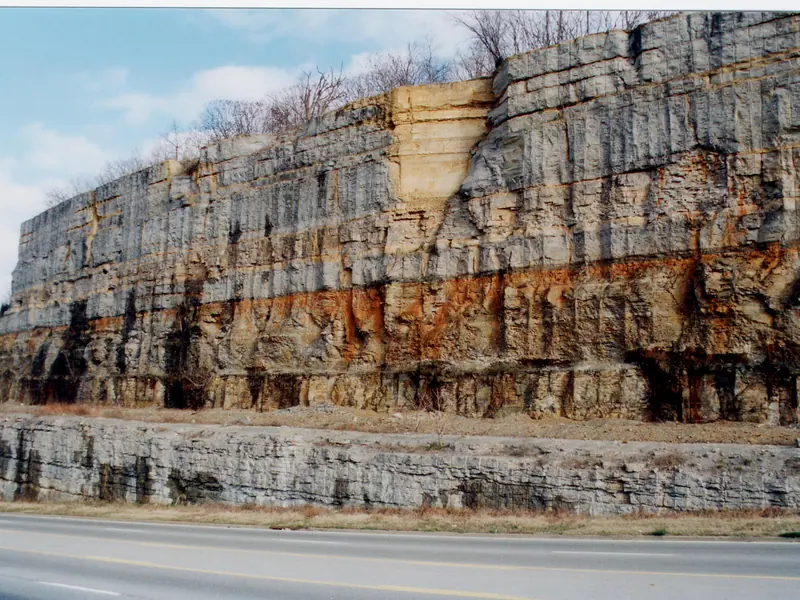
Not necessarily. A private well draws groundwater from limestone and can read very differently from treated river water. Test the well itself rather than borrowing the city figure.
Is softened water fine to drink?
A softener adds some sodium or potassium as it removes hardness. The Penn State video notes a potassium option for people watching their sodium. Ask a doctor if a diet limit applies.
Sources
- Clarksville Gas & Water — Water Quality Report page, 2025 Water Quality Characteristics · hardness average and range in mg/L and grains, pH, alkalinity · checked 6 Nov 2026
- USGS Water Science School — Hardness of Water · soft, moderately hard, hard and very hard classes; diet note · checked 6 Nov 2026
- City of Clarksville — Annual Drinking Water Quality Report, 2025 data · Cumberland River source, sodium 8.66 ppm · checked 6 Nov 2026
- US EPA — Secondary Drinking Water Standards: Guidance for Nuisance Chemicals · no secondary number for hardness; aesthetic effects · checked 6 Nov 2026
- Penn State Extension — Water Softening (video) · how softeners work and are maintained · checked 6 Nov 2026